


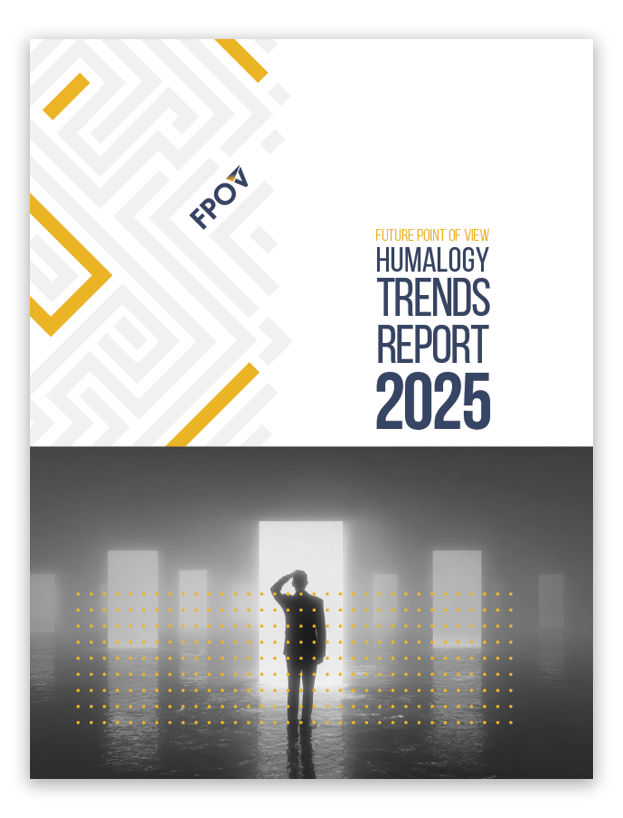
The 2025 HUMALOGY® Trends Report reveals a year defined by rising expectations and uneven organizational readiness. Leaders overwhelmingly agree that AI will be the most influential force of the next five years, yet nearly 70% report they have not meaningfully begun their AI strategy.
Leaders anticipate rapid acceleration in AI capabilities, which increases the urgency of building trusted systems, oversight structures, and accountability mechanisms. Overall, the insights point to a landscape where belief in the future is strong, but organizational execution remains premature.
We polled leaders in the following areas:
We gathered qualitative and quantitative insights from thousands of leaders in industries including healthcare, government, financial services, energy, technology, education, and professional services. Areas of focus included:
- AI Policy & Governance
- The Economics of AI
- AI Leadership & Culture
- AI Strategy
Some of our key findings include:
This year’s findings reflect an environment where leaders recognize the scale of technological change but are limited by infrastructure, capability, and culture. Several major themes emerged across industries.
- First, organizations have moved past the debate of whether AI matters. Leaders now focus on timing, readiness, and the practical work required to modernize. Digital debt surfaced as one of the most significant obstacles, with outdated systems blocking integration with newer technologies and slowing progress toward advanced AI capabilities.
- Second, leadership enthusiasm outpaces organizational execution. While executives express strong personal excitement for AI, they acknowledge gaps in alignment, clarity, and cultural readiness within their organizations. Workforce capability remains a decisive factor. Teams with intentional upskilling programs are gaining momentum, while others struggle to adapt to rapid changes in tools and workflows.
- Third, leaders project meaningful financial impact from AI. They expect shifts in revenue, margins, and efficiency over the next decade. However, most prefer a steady pace that balances innovation with responsible resource management.
- Fourth, governance and risk management are rising as strategic priorities. Leaders consistently highlighted the importance of responsible adoption, transparency, and trustworthy systems. Although many favor internal oversight, most recognize that their current governance frameworks require significant development.
Collectively, these insights reveal that leaders understand where technology is heading. The challenge is converting that understanding into aligned leadership, modernized systems, skilled teams, and actionable strategy.
Previous Years Trends Reports:
Please fill out the form to download the report
"*" indicates required fields
*We’re committed to your privacy. Future Point of View uses the information you provide to us to contact you about our relevant content and services. You may unsubscribe from these communications at any time. For more information, check out our Privacy Policy at fpov.com/privacy-policy